
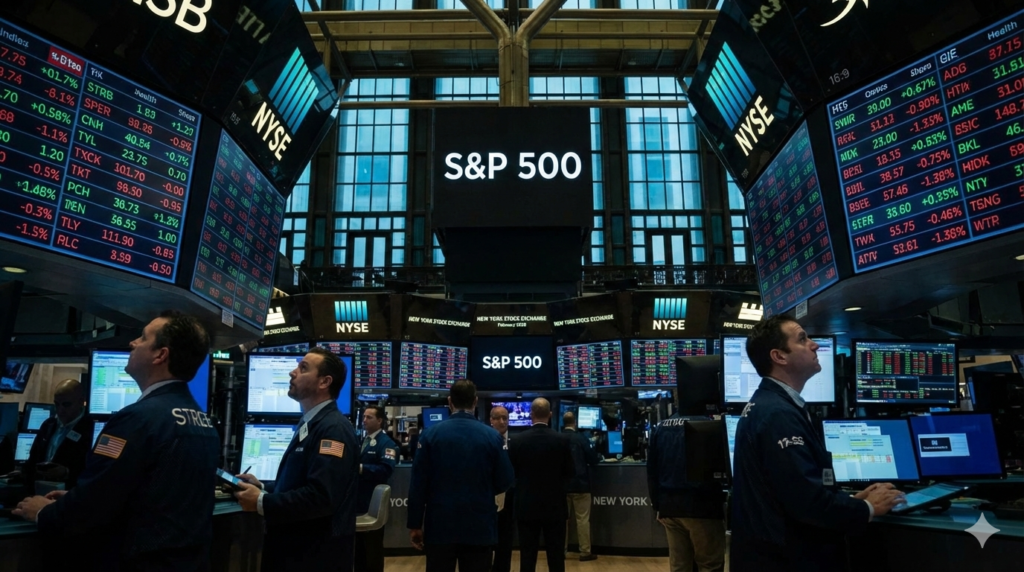
Why is the S&P 500 flat despite the tech sector’s recent pressure?
Featured Snippet: The S&P 500 is showing little change as a result of a tug-of-war between strong corporate earnings and macroeconomic headwinds. While large-cap tech stocks are facing downward pressure due to concerns over AI investment returns and high valuations, other sectors like industrials and small-caps are providing enough support to prevent a broader market crash. Additionally, weaker-than-expected private payroll data from January has fueled hopes for potential rate cuts, balancing the negative sentiment from tech volatility and creating a stagnant, “wait-and-see” environment for investors.
Walking through the financial district this morning, you could practically feel the tension in the air. For investors in early 2026, the market has become a complex puzzle where one day’s record high can be quickly overshadowed by the next day’s tech selloff. Currently, the S&P 500 is hovering near the break-even mark, struggling to find a clear direction as heavyweight technology names continue to face significant pressure.
This lack of movement is particularly interesting because it coincides with a shift in how we view economic stability, much like how why everyday life is getting more expensive for many American families despite positive top-line growth.
1. The Tech Sector’s “Reality Check”
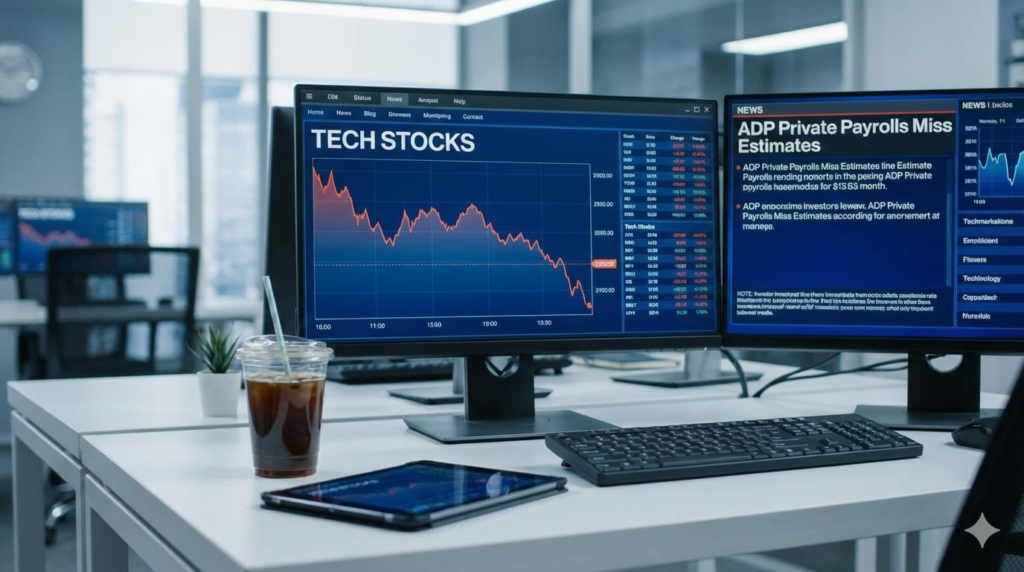
The primary drag on the indexes right now is the information technology sector. After a massive run-up fueled by artificial intelligence, investors are starting to demand more tangible results. High-profile companies like Nvidia and Microsoft have seen their shares cool off as the market reassesses whether their 2026 earnings can justify current valuations.
We are seeing a massive rotation out of tech and into more traditional sectors. This shift is a reminder of how quickly sentiment can change, similar to the recent market shift where infrastructure became the new play for many institutional investors.
2. Weak Jobs Data: A Double-Edged Sword
The latest ADP private payrolls report added another layer of complexity. With only 22,000 jobs added in January—far below the anticipated 45,000—the labor market is showing clear signs of cooling. While this is normally a negative sign for the economy, in the current stock market context, it’s keeping the S&P 500 afloat.
Weak jobs data often signals to the Federal Reserve that it may be time to lower interest rates. Investors are weighing this “bad news is good news” scenario against the reality of a slowing economy. It’s a delicate balance that affects everything from mortgage rates to why personal loans feel necessary for many households today.
3. Waiting for the Big Tech Giants
The market is currently in a holding pattern as it awaits earnings reports from Alphabet, Amazon, and Apple. These “Magnificent Seven” companies hold so much weight in the S&P 500 that their performance will likely dictate the market’s direction for the rest of February.
As we wait for these results, the overall volatility serves as a reminder to focus on diversification. Relying too heavily on a single sector can be risky, which is why many are looking toward long-term strategies like building a passive income stream that lasts through dividend investing.
[Actionable Tip] Navigating a Flat Market
When the S&P 500 is “little changed,” it’s often the best time to review your portfolio’s fundamentals:
- Rebalance Away from Concentration: If your portfolio is more than 40% tech, consider shifting some gains into undervalued sectors like healthcare or utilities.
- Monitor the 50-Day Moving Average: The S&P 500 is currently holding above its key technical support levels. If it drops below these, it might be time to increase your cash position.
Final Thoughts: Resilience Amid Uncertainty
The 2026 stock market is proving to be resilient, even in the face of tech pressure and weak employment signals. While the S&P 500 may not be breaking records today, the underlying rotation suggests that the rally is broadening out beyond just artificial intelligence. Stay patient, stay diversified, and keep a close eye on the upcoming earnings calls.
Source: CNBC – S&P 500 Live Updates Feb 4, 2026
Do you think the cooling labor market will force the Fed to cut rates sooner than expected? Let’s discuss your 2026 predictions in the comments!
Pingback: Dow Jones Futures Analysis 2026: Navigating a Dangerous Market for Big Tech - World Update Today