

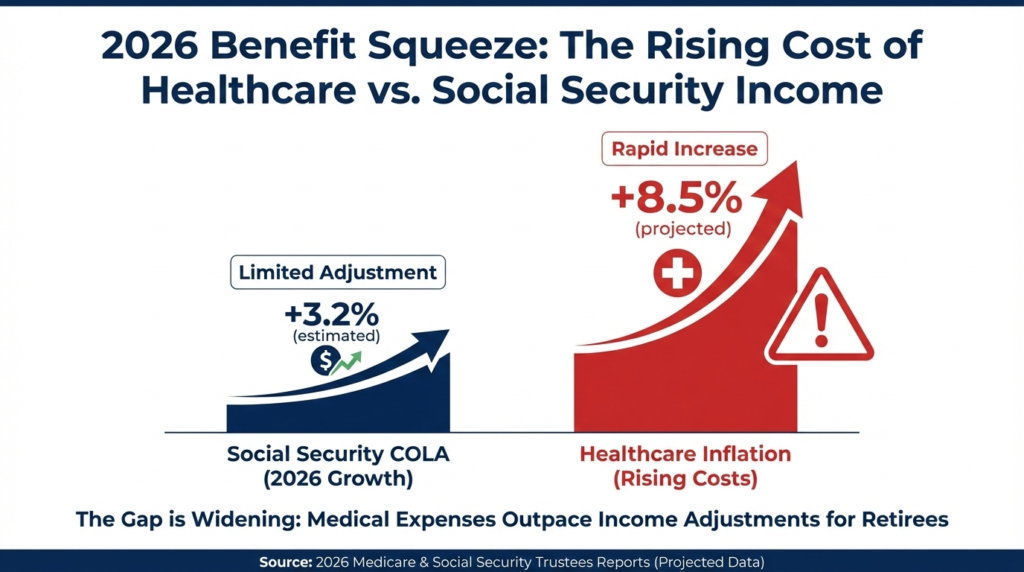
As we navigate the fiscal landscape of the new year, a concerning trend has emerged: healthcare costs Social Security 2026 increases are beginning to outpace the annual Cost of Living Adjustment (COLA). During a recent financial planning summit, analysts pointed out that while Social Security checks saw a modest bump, the simultaneous rise in Medicare Part B premiums has effectively neutralized those gains for millions of Americans.
The relationship between healthcare costs Social Security 2026 and your take-home benefit is more critical than ever. Consequently, many retirees are finding that their “inflation-adjusted” checks buy less than they did a year ago. Therefore, understanding the underlying drivers of these costs is the first step toward reclaiming your financial independence.
Why Healthcare Inflation is Neutralizing COLA Gains
What is driving this shift? Primarily, the increased demand for advanced medical technologies and the rising price of specialized treatments have pushed Medicare costs higher. In addition, new federal mandates under the OBBBA have restructured how certain benefits are funded, leading to a temporary spike in monthly premiums for many beneficiaries.
Specifically, even with the new $2,000 prescription drug cap, the fixed costs of premiums and deductibles continue to climb. This creates a “benefit squeeze” that requires a more proactive approach to fighting back against 2026 healthcare costs.
Key Data: 2026 Benefit Impact
- Average COLA Increase: 2.8% for 2026.
- Medicare Part B Premium Hike: Estimated 5.2% increase.
- Net Impact: A potential reduction of $30-$50 in monthly discretionary income for the average senior.
Strategies to Protect Your Social Security Income
If you feel that inflation is affecting your everyday life, you must adjust your healthcare strategy immediately. Moreover, there are specific steps you can take to minimize the impact of rising premiums on your healthcare costs Social Security 2026 calculations:
- Review Medicare Advantage Plans: Some private plans offer “premium giveback” features that credit a portion of your Part B premium back to your Social Security check.
- Apply for Extra Help: The income thresholds for federal assistance programs have been expanded in 2026. According to the Social Security Administration (SSA), millions of eligible seniors fail to apply for these offsets.
- Utilize Preventive Benefits: Focus on zero-cost preventive services to avoid the high out-of-pocket expenses associated with chronic condition management.
In conclusion, the challenge of healthcare costs Social Security 2026 requires a shift from passive receiving to active management. By contrast to previous decades, relying solely on the COLA is no longer enough to ensure a stable retirement. Ultimately, by leveraging new federal protections and staying informed, you can protect your hard-earned benefits from being swallowed by medical inflation.
The bottom line: Be proactive during the upcoming open enrollment periods. Audit your medical spending, compare new plans, and ensure your healthcare choices align with your long-term financial health.