
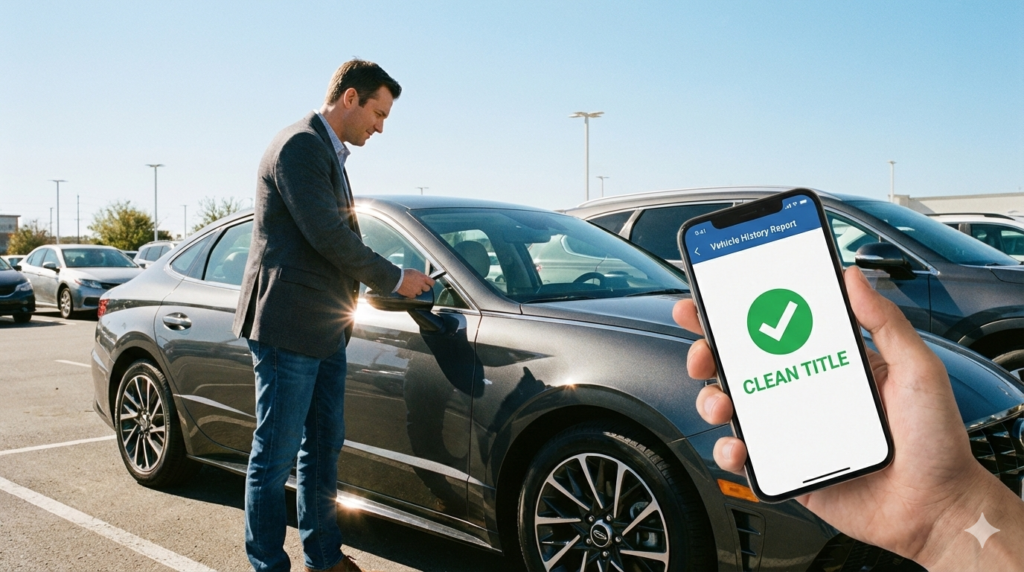
Buying a used car can feel like a high-stakes game of chance. While the market has stabilized recently, the methods scammers use have become increasingly sophisticated. In 2026, it’s not just about kicking the tires anymore; it’s about verifying digital history and ensuring the technology under the hood is as healthy as the seller claims.
Just as you wouldn’t navigate the Healthcare System without a clear understanding of the rules, you shouldn’t step onto a car lot without a solid plan. Here is your essential checklist for a safe and smart purchase this year.
1. Beware of “Curbstoning”
“Curbstoning” is a common scam where a professional dealer poses as a private seller to avoid following legal regulations. They often flip salvage-title cars that are unsafe to drive.
- The Red Flag: If the seller’s name on the title doesn’t match their ID, walk away.
- The Action: Always meet in a safe, public place and ask to see the title before you even start the engine. If the seller says they are “selling it for a friend,” it’s almost certainly a scam.
2. Verify the EV Battery Health (Crucial for 2026)
With more used Electric Vehicles (EVs) on the market than ever before, battery health has become the #1 factor in a car’s value.
- The Scam: Some sellers use software tricks to temporarily “reset” the battery health indicator to show a higher range than it actually has.
- The Solution: Use an independent battery diagnostic tool or take the car to a certified technician who can provide a “State of Health” (SoH) report. A battery at 70% capacity is worth significantly less than one at 90%.
3. Check for “Title Washing”
Title washing involves moving a vehicle with a “totaled” or “salvage” status to another state that has different disclosure laws, effectively “washing” the negative history off the document.
- The Action: Don’t rely on a printed report provided by the seller. Pull your own report using the Vehicle Identification Number (VIN) through the National Motor Vehicle Title Information System (NMVTIS). This is a secure, federal-level database that catches title issues across state lines.
4. The Pre-Purchase Inspection (PPI) is Non-Negotiable
Never buy a used car without an independent Pre-Purchase Inspection. Many buyers skip this to save $150, only to end up with thousands of dollars in repairs a month later.
- Pro Tip: Look for mobile inspection services. They will meet the seller at their location and provide you with a digital report including photos of the undercarriage, fluid levels, and any hidden accident damage.
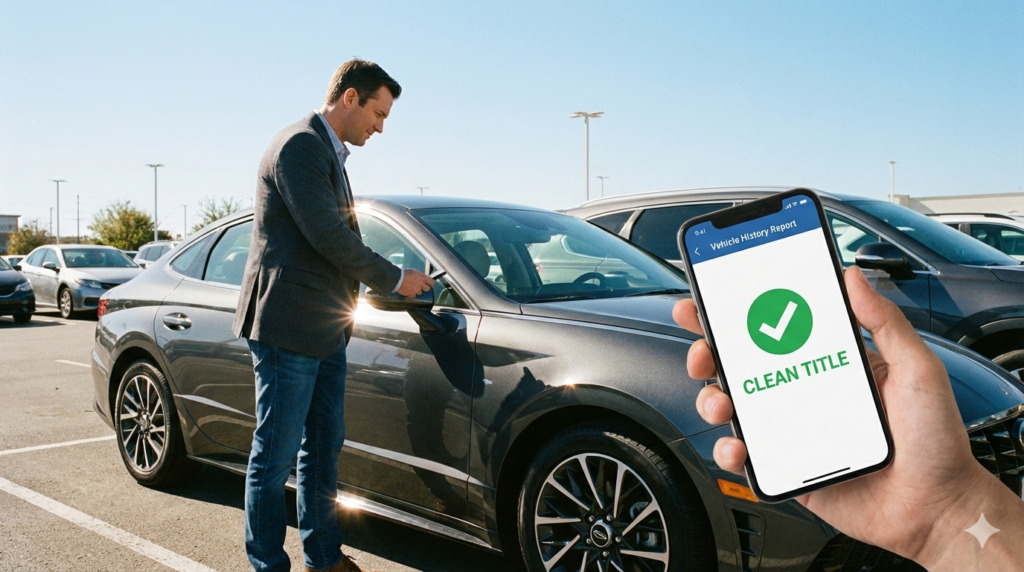
5. Secure Financial Peace of Mind
Before finalizing your purchase, ensure you have factored in the ongoing costs. Much like how Health Insurance Feels Essential for your personal well-being, getting a proper mechanical warranty or insurance quote for your new-to-you vehicle is a vital part of your financial planning.
Final Thoughts: Trust Your Instincts
If a deal seems too good to be true, it probably is. In the 2026 market, quality cars hold their value. By following this checklist and doing your due diligence, you can drive away with a reliable vehicle and your savings intact.
What’s the best (or worst) experience you’ve had buying a used car? Share your story in the comments below!